Black and grey realism is one of the most demanding tattoo styles — and one of the most rewarding when done right. No color to hide behind. No thick outlines to structure the design. Just light, shadow, and skin.
If you’re considering a realism piece, choosing the right subject matters as much as choosing the right artist. Some concepts translate beautifully to skin. Others look amazing as digital art but don’t survive the healing process.
After years of specializing in black and grey realism, these are the concepts I see clients come back to again and again — and the ones that consistently produce the strongest results.
Portraits
1. Family portraits
A mother’s face. A grandfather who passed. A child’s expression frozen at a specific age. Family portraits are deeply personal and one of the most requested realism subjects worldwide.
What makes it work: Strong reference photos with clear lighting. Ideally, a single photo with directional light — not flat, evenly lit selfies. The contrast between light and shadow is what gives a portrait its depth on skin.
Best placement: Upper arm, forearm (inner or outer), thigh, chest. You need enough surface area for the face to be rendered at a readable size — too small and the details blur as the tattoo ages.
2. Celebrity or icon portraits
Musicians, athletes, actors, historical figures. These work well because the reference photos are usually high-quality and the subject is instantly recognizable.
What makes it work: Choosing an iconic image rather than a random photo. A portrait of Muhammad Ali mid-fight reads differently than a headshot. The context matters.
Best placement: Upper arm, calf, thigh. Large enough for instant recognition.
3. Self-portraits or partner portraits
Less common but increasingly popular. These require exceptional reference photos and an artist who can capture subtlety — the difference between “looks like a person” and “looks like that person” is entirely in the details.
Wildlife and nature
4. Lions
The most popular realism subject across every studio I’ve worked in — and for good reason. The mane provides incredible texture opportunities, and the face has natural contrast between light fur and dark features.
What makes it work: A three-quarter angle or straight-on gaze with dramatic lighting. Side profiles work but lose the intensity of direct eye contact.
Best placement: Chest, upper arm, thigh, calf. The mane needs room to breathe.
5. Eagles and birds of prey
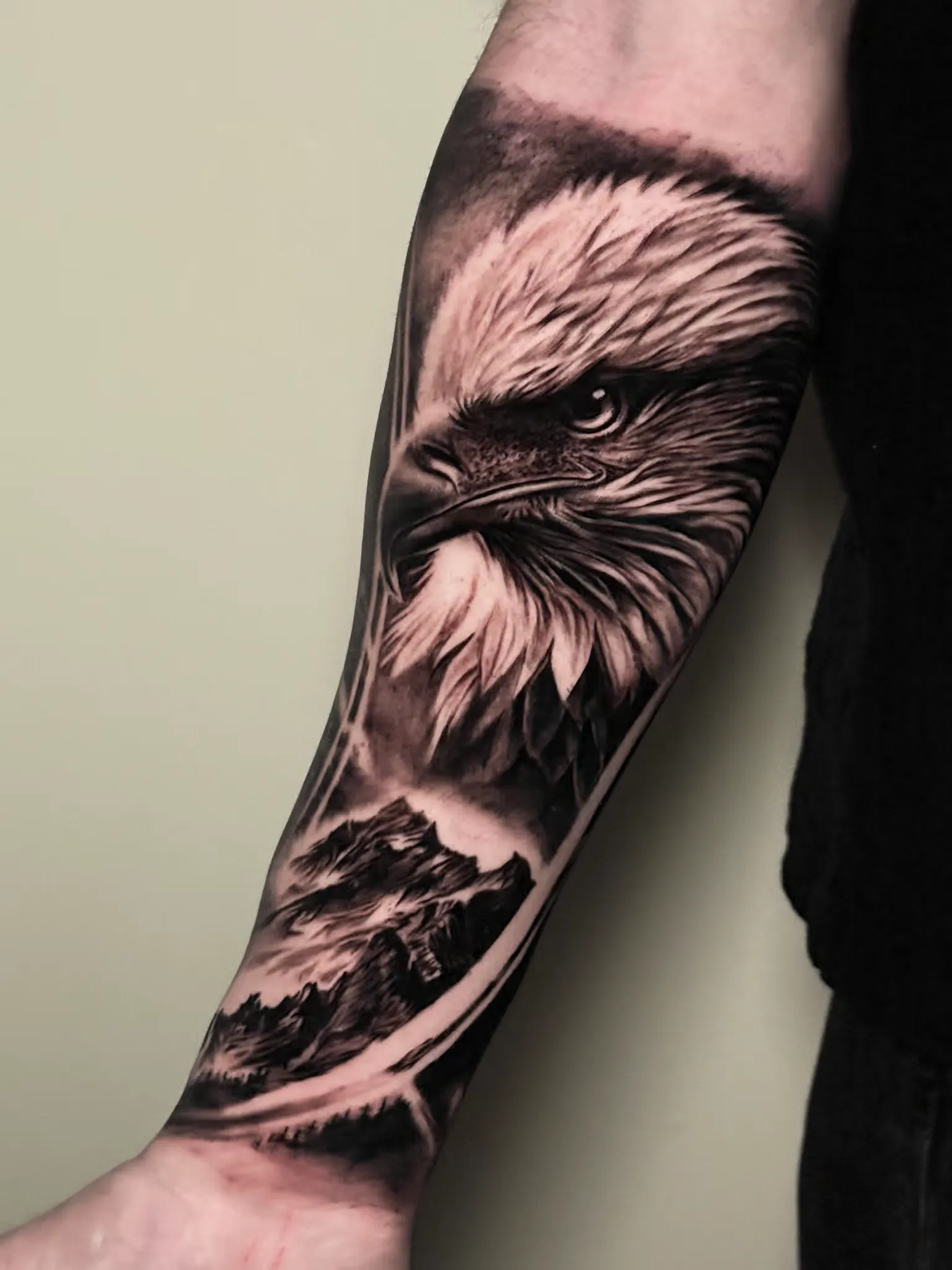
Wings spread or head in profile — eagles offer dynamic compositions with sharp detail in the feathers and intense expression in the eyes.
What makes it work: Feather texture. The transition from soft body feathers to sharp wing feathers creates natural depth. Reference photos with the bird in flight add movement and drama.
Best placement: Chest, back, full forearm wrap. The wings can follow the body’s natural contours.
6. Tigers
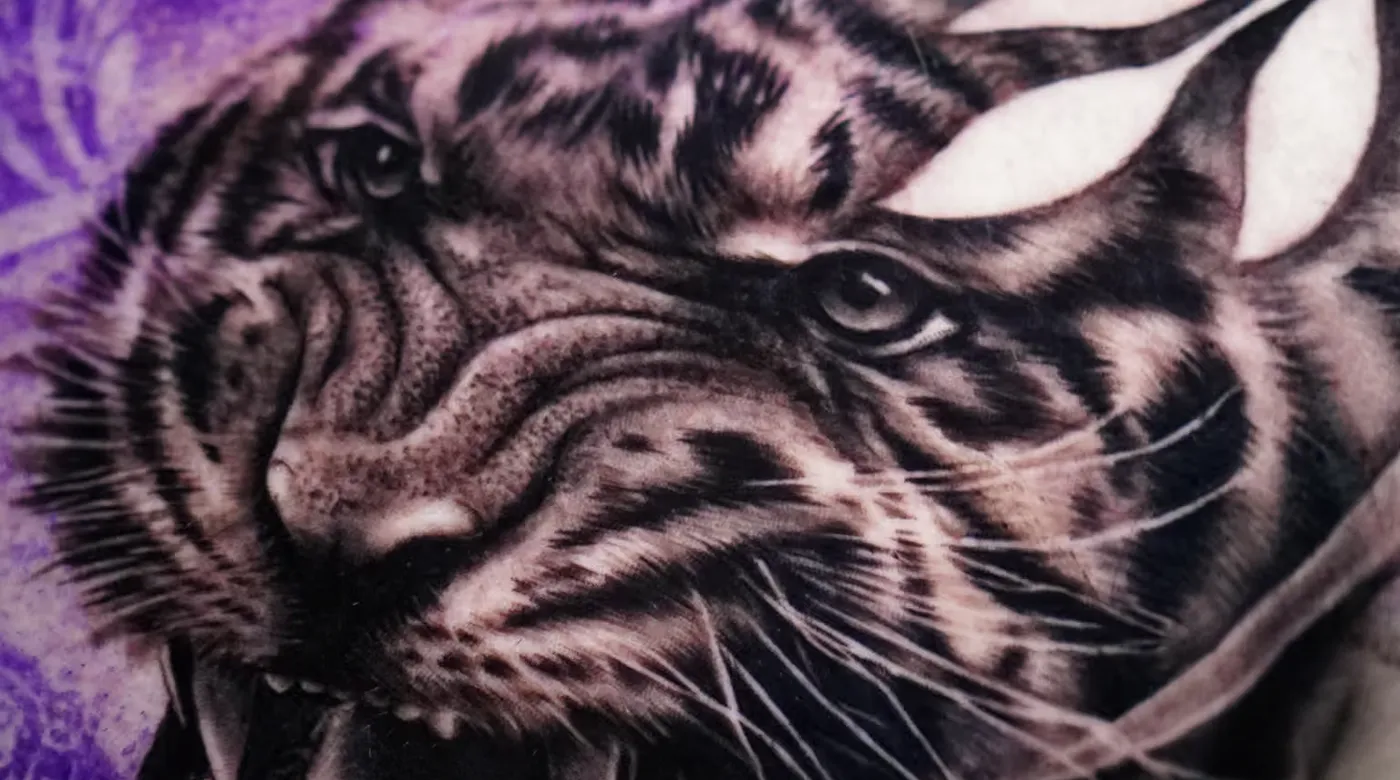
Similar to lions in popularity, but the stripe pattern adds a layer of complexity that separates good realism from great realism. The stripes need to follow the three-dimensional form of the face — flatten them and the whole piece falls apart.
What makes it work: Dramatic lighting that emphasizes the stripe pattern. A slight head tilt adds character.
Best placement: Chest, ribcage, thigh. The broad facial structure needs space.
7. Wolves
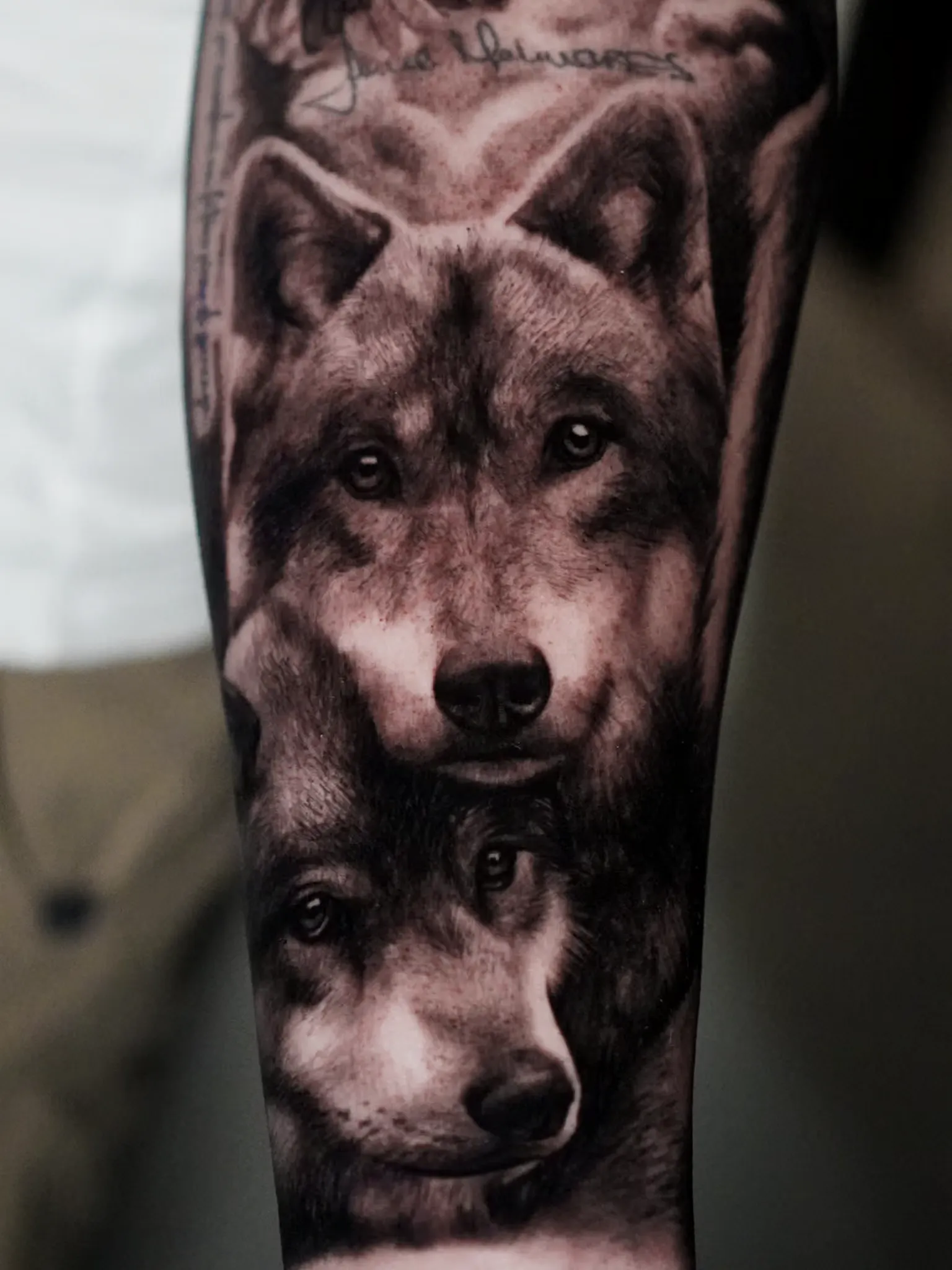
Wolves carry strong symbolism — loyalty, resilience, family — and the fur texture provides rich opportunities for detailed shading. A howling wolf, a pack, or a close-up portrait all work differently but equally well.
What makes it work: Fur direction and density. Wolves have multiple layers of fur that catch light differently. Getting this right is what separates flat-looking work from pieces that feel alive.
8. Roses and florals
Yes, in realism. A photorealistic rose — with water droplets, curling petals, and natural decay — is a completely different piece than a traditional or neo-traditional rose. The subtlety in petal shading and the way light passes through thin petals makes these deceptively complex.
What makes it work: A single bloom as the focal point with supporting elements (leaves, stems, other flowers) creating depth. Overcomplicating the composition is the most common mistake.
Best placement: Forearm, hand, neck, thigh. Roses scale well both up and down.
Religious and spiritual
9. Christ and religious figures
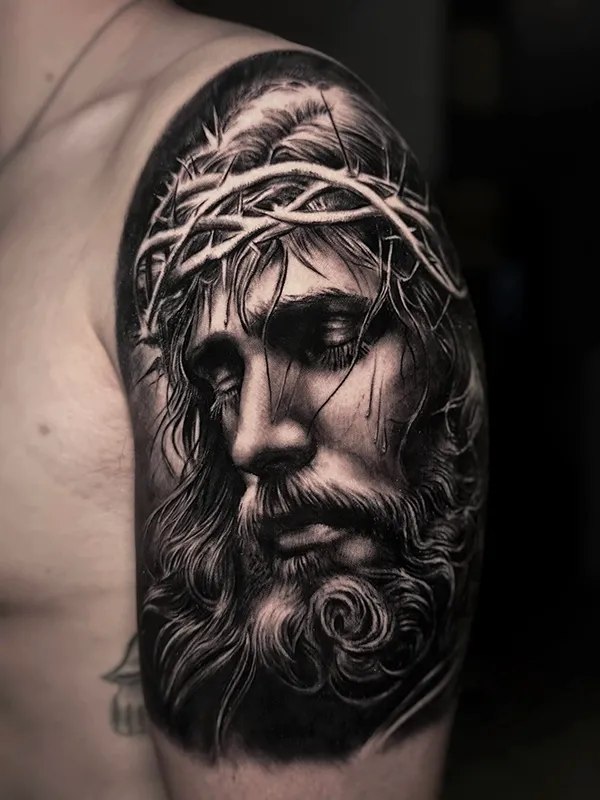
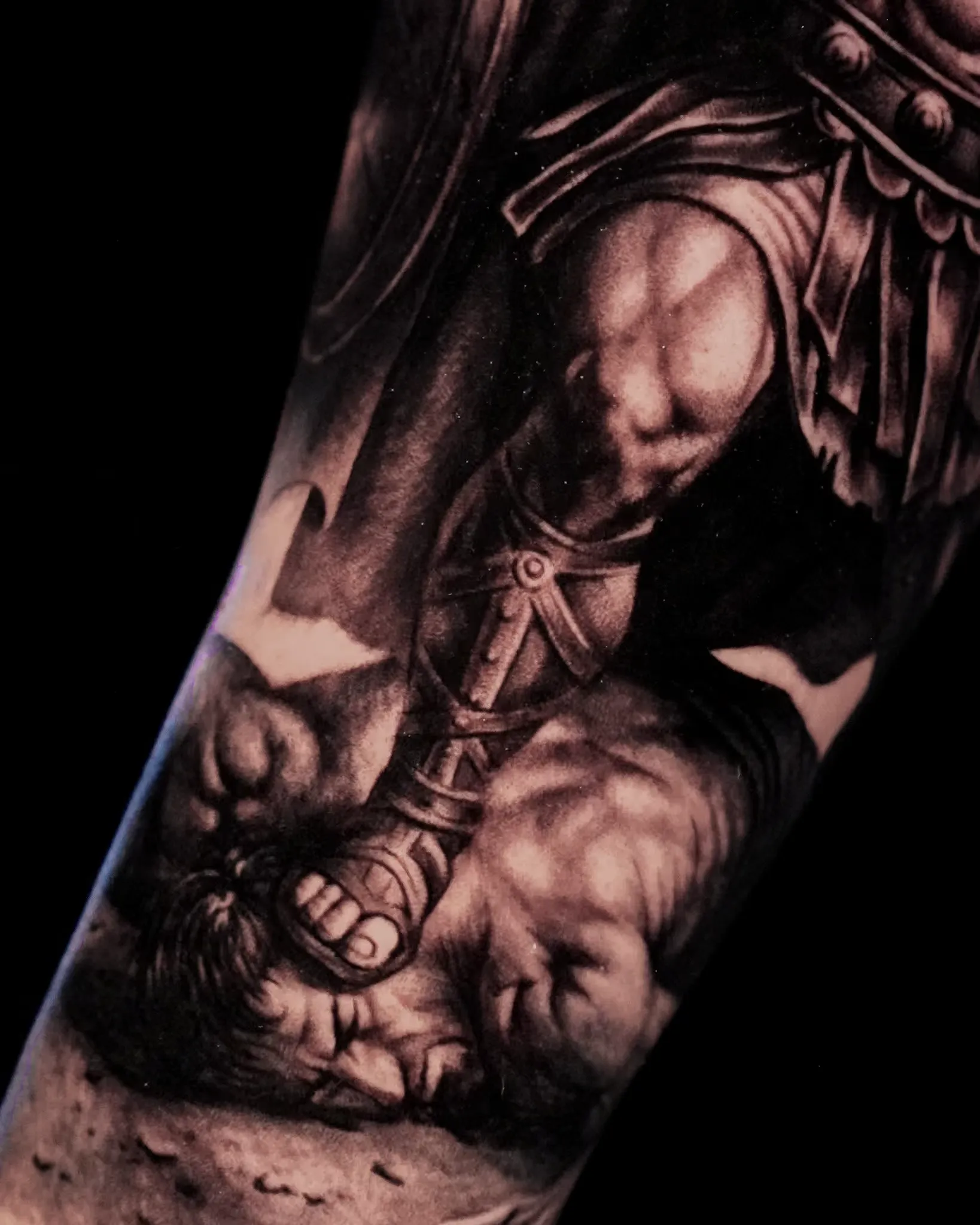
Religious realism is its own subcategory. Pieces depicting Christ, the Virgin Mary, angels, or saints are deeply meaningful to clients and demand technical precision — the expressions need to convey emotion without exaggeration.
What makes it work: Renaissance painting references. The masters already solved the lighting and composition problems centuries ago. Caravaggio, Michelangelo, and Bernini are better reference sources than most photographs.
Best placement: Full back, chest, sleeve. These are typically large-scale pieces that command space.
10. Angels and mythology
Angel wings, Greek sculpture reproductions, mythological scenes. These blend realism with artistic interpretation — you’re recreating something that doesn’t exist in reality, but it still needs to feel real.
What makes it work: Referencing actual sculptures rather than fantasy illustrations. The human form in marble has already been idealized — translate that into skin and it reads as both classical and contemporary.
Best placement: Back, full sleeve, ribcage. These compositions tend to be vertical and need length.
Symbolic and conceptual
11. Clock and compass compositions
Time, direction, mortality, guidance. These mechanical objects have intricate internal details that showcase an artist’s precision. The gear work inside a clock or the detailed markings on a compass face require steady, deliberate shading.
What makes it work: Combining the mechanical element with organic elements — a clock wrapped in roses, a compass overlaid on a map or landscape. The contrast between geometric precision and natural forms creates visual tension.
Best placement: Forearm, chest, thigh. The circular composition fits naturally on curved body areas.
12. Eye studies
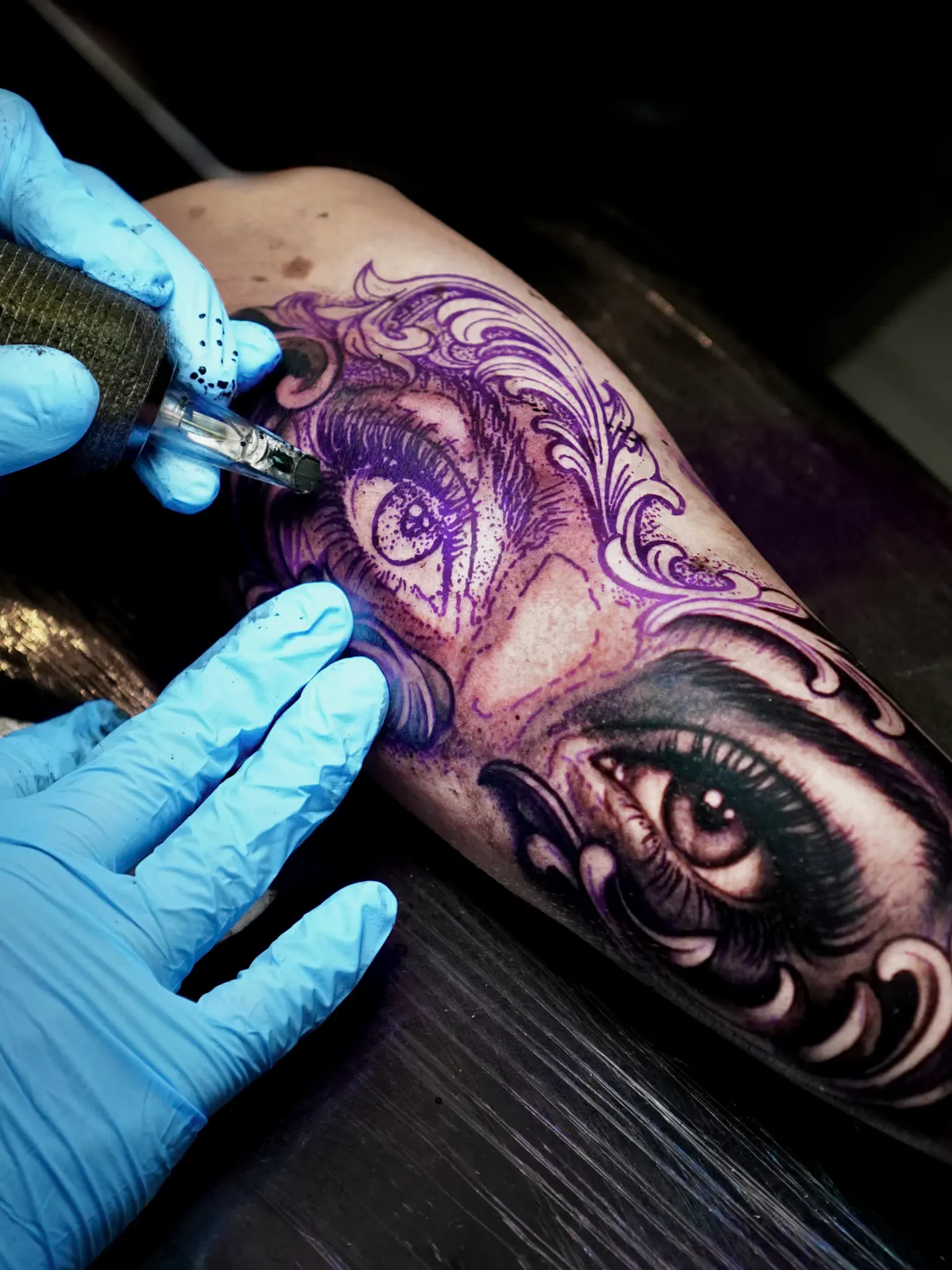
A single hyper-realistic eye — with visible iris detail, reflections in the cornea, and natural lash texture — is one of the most striking pieces you can get. It’s also one of the hardest to execute, because everyone knows what an eye looks like. There’s no room for approximation.
What makes it work: Reflection detail. A realistic eye without a light reflection in the cornea looks dead. That tiny white highlight is what sells the entire piece.
Best placement: Inner forearm, hand, behind the ear. Can work at surprisingly small scales if the artist is precise enough.
13. Skull compositions
Skulls are universal in tattooing, but in realism they take on a different character. A realistic human skull with accurate bone structure, teeth, and cranial sutures is a study in anatomy. Add elements — a crown, smoke, a snake — and it becomes a narrative.
What makes it work: Anatomical accuracy. The skull has specific proportions that the eye instinctively recognizes. Get those wrong and it reads as cartoonish, no matter how detailed the shading is.
Best placement: Forearm, hand, calf, thigh. Skulls are surprisingly versatile in placement.
Full compositions
14. Sleeve narratives
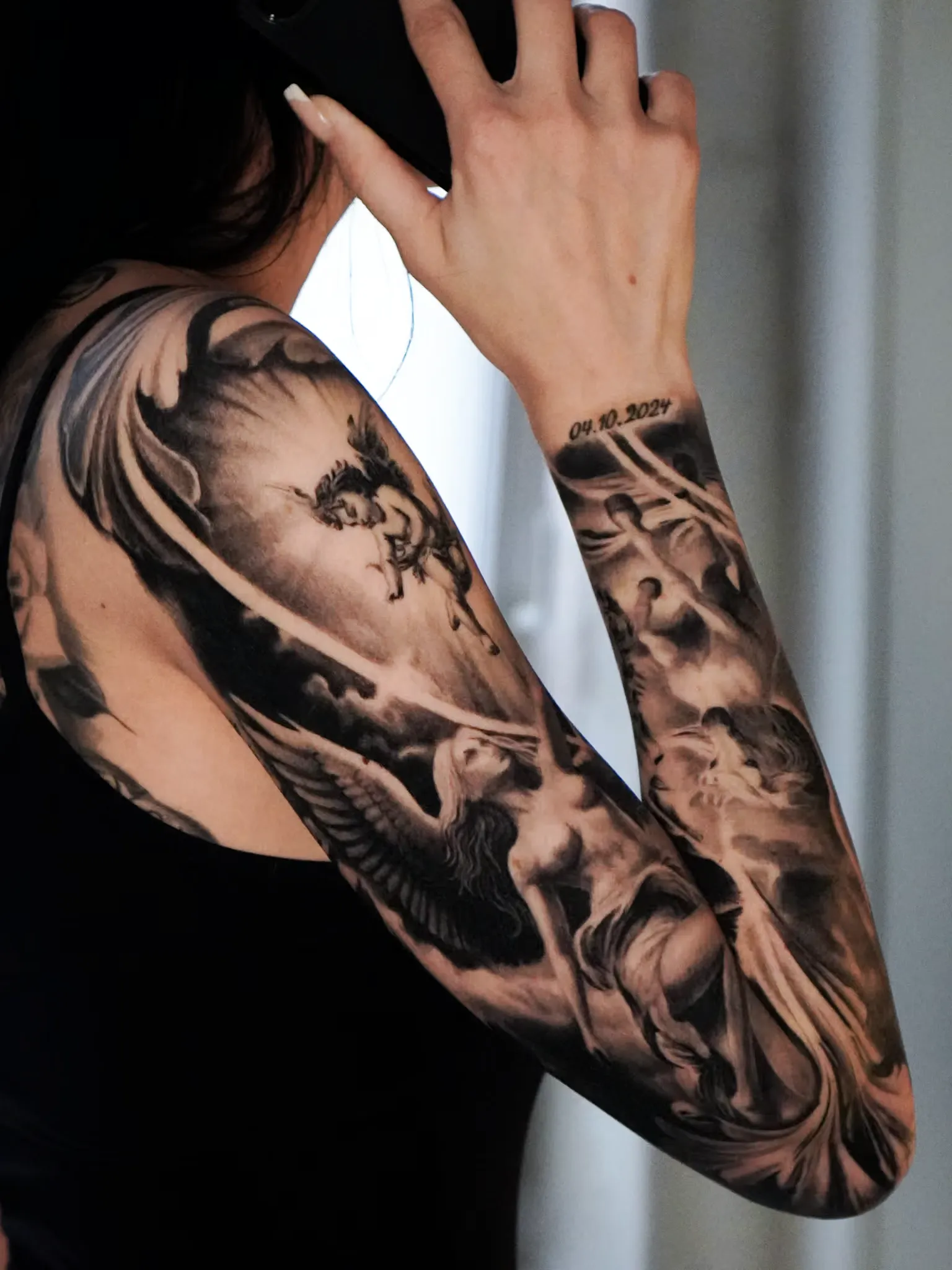
A full sleeve tells a story. The best ones aren’t random collections of objects — they have a visual flow that connects elements through shared lighting, background texture, and compositional direction.
What makes it work: Planning. The strongest sleeves are designed as a single composition, not built piece by piece over time. Background elements (smoke, clouds, geometric patterns, negative space) are what tie individual subjects together.
Best placement: Full arm, obviously. But the design should account for the inside of the arm, the elbow, and the transitions between sections.
15. Chest panels
Symmetrical or asymmetrical chest pieces that frame the collarbone and sternum. These are among the most visually impactful placements — the flat, broad canvas allows for detailed realism work that’s impossible on curved or narrow body parts.
What makes it work: Working with the body’s natural symmetry. Even asymmetrical designs need to respect the centerline and collarbone structure. Ignoring anatomy leads to pieces that look off when the body moves.
Choosing references that work on skin
The most important thing to understand about realism tattoos: not every photo makes a good tattoo.
Photos that work have:
- Strong directional light. Side lighting creates shadows. Shadows create depth. Flat, even lighting produces flat tattoos.
- Clear focal point. One main subject, not a busy scene with ten elements competing for attention.
- Good contrast. The difference between the lightest and darkest areas needs to be significant. Low-contrast photos produce muddy tattoos.
- Appropriate detail level for the size. A photo with thousands of tiny details doesn’t scale down to a 4-inch tattoo. The details merge and blur within a year.
If your reference photo is dimly lit, blurry, or overly busy, the tattoo will inherit those problems. I always work with clients to select or adjust references before starting the design — it’s one of the most important parts of the process.
Finding the right realism artist
Realism is unforgiving. With geometric or traditional styles, slight inconsistencies can blend into the aesthetic. With realism, every flaw is visible. A slightly off proportion in a portrait, a wrong light direction, or a missed gradient — it all shows.
When choosing an artist for a realism piece:
- Look at their realism work specifically, not their full portfolio
- Ask for healed photos — fresh realism always looks sharp; what matters is how it holds up
- Check consistency across many pieces, not just the top 3 on their Instagram
- Ask about their process for handling references and designing the piece
If you’re considering a black and grey realism piece and want to see what’s possible, check out my Instagram for the latest work or browse the full portfolio. Every piece is real work on real skin — no filters, no AI, no digital enhancement.
I tattoo out of Inksignia Tattoo Studio in Barranquilla, Colombia — with the same standards I learned working in Europe. Ready to start? Send your idea and get a free quote.