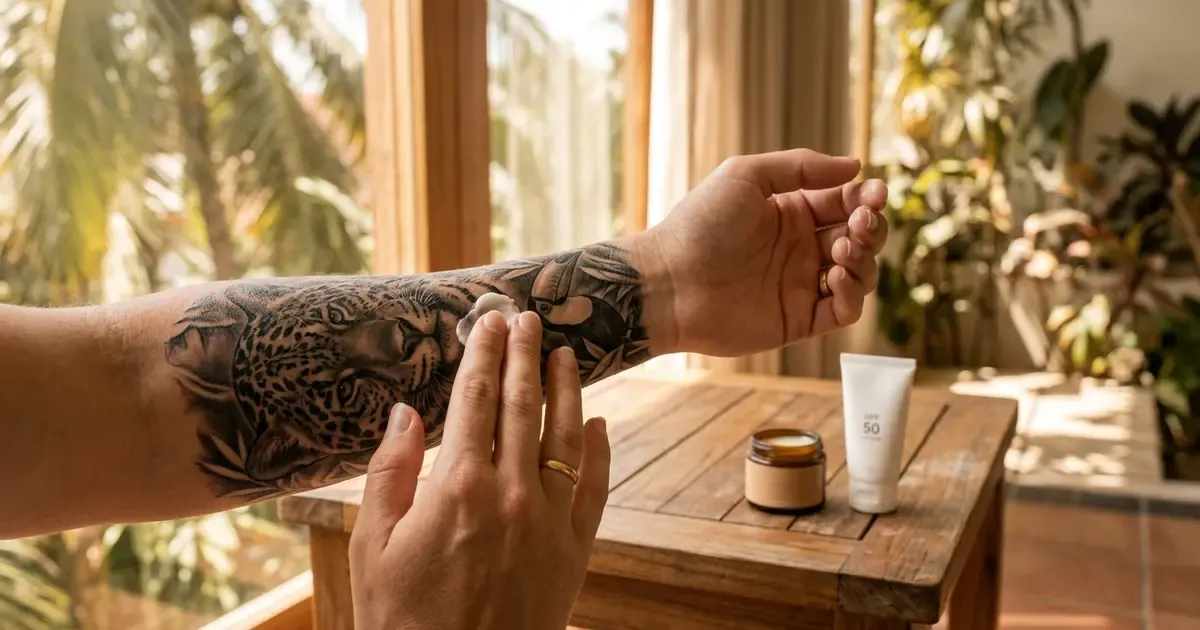
Most tattoo aftercare guides are written by artists in temperate climates. Keep it moisturized. Avoid sun. Don’t soak it. Standard advice.
But if you just got tattooed in Barranquilla, Cartagena, Bali, or Bangkok — where it’s 33°C with 85% humidity and the sun could cook an egg on the sidewalk — that generic advice isn’t enough. Tropical weather introduces specific challenges that can affect how your tattoo heals and how it looks long-term.
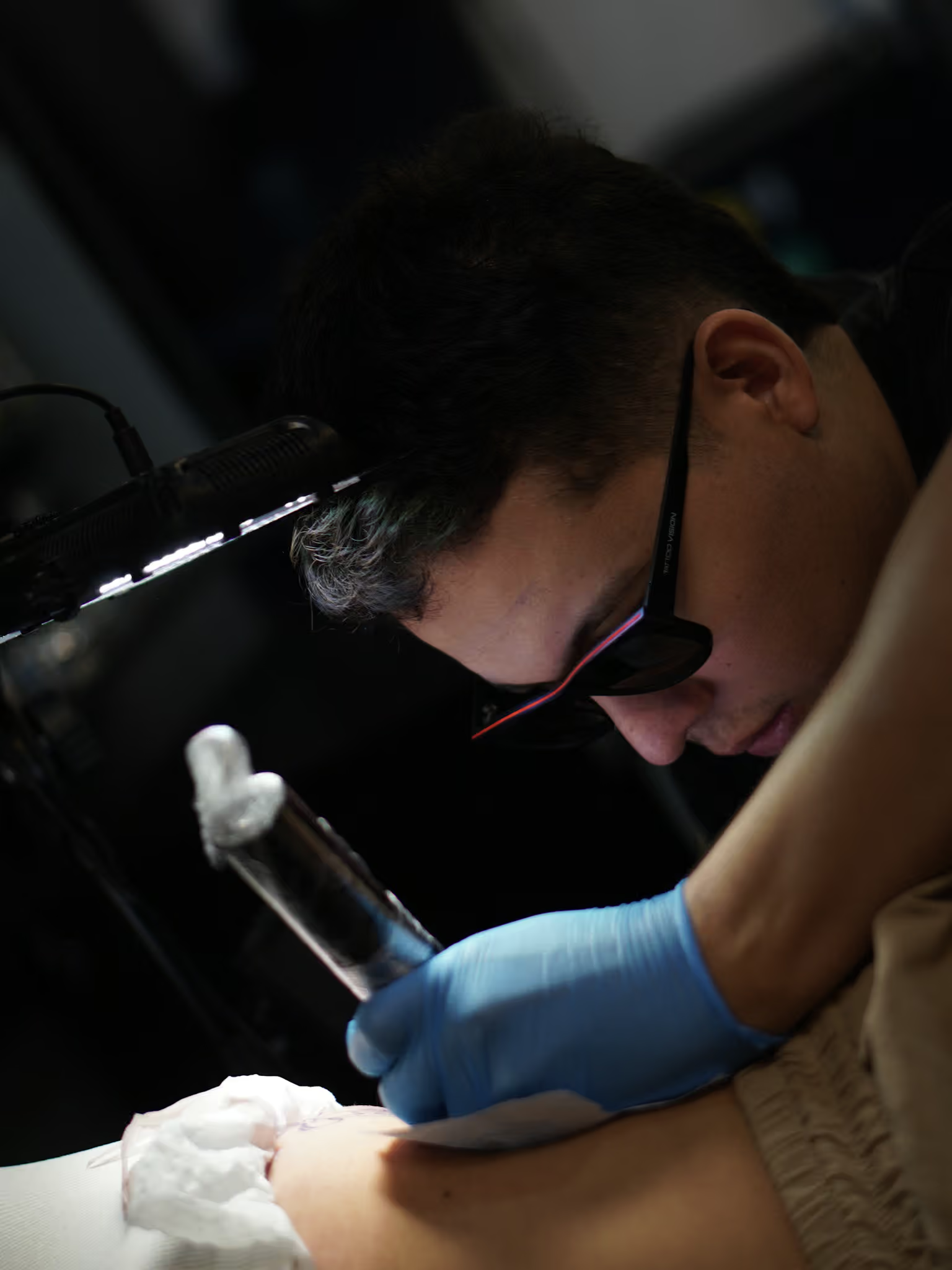
I tattoo out of Inksignia Tattoo Studio in Barranquilla, Colombia — a Caribbean city where temperatures rarely drop below 28°C and humidity stays above 70% year-round. Every aftercare recommendation I give my clients is built for this climate. Here’s what you need to know.
Why tropical weather affects tattoo healing
A fresh tattoo is an open wound. Your skin needs to repair itself, form a protective barrier, and settle the ink into the dermis. This process takes 2-4 weeks for the surface and up to 3 months for full internal healing.
In temperate climates, the main enemies are dryness and friction. In the tropics, the enemies are different:
Excessive sweating
Heat makes you sweat. Sweat sitting on a fresh tattoo introduces salt, bacteria, and moisture to an open wound. Prolonged moisture can soften the healing skin, delay scab formation, and in worst cases, pull ink out of the dermis.
Humidity and bacterial growth
Warm, humid environments are where bacteria thrive. The same conditions that make tropical forests lush also make fresh wounds more vulnerable to infection. This doesn’t mean infection is likely — it means aftercare discipline matters more.
Intense UV exposure
Tropical sun is stronger. UV radiation breaks down tattoo ink molecules, causing fading and color shifts. A fresh tattoo has zero UV protection — the skin barrier hasn’t reformed yet. Even 15 minutes of direct tropical sun on a healing tattoo can cause noticeable damage.
Salt water and chlorine
If you’re near the Caribbean coast or a resort pool, the temptation to swim is real. Both salt water and chlorinated water can irritate a healing tattoo, introduce bacteria, and pull moisture from the skin in ways that compromise healing.
Day-by-day aftercare for tropical climates
Day 1: The session day
Your artist will cover the tattoo with either adhesive film (like Saniderm or Dermalize) or a protective pad. In tropical climates, I strongly recommend adhesive film for the first wrap — it creates a sealed, breathable barrier that protects against sweat and environmental bacteria while allowing the skin to breathe.
- Leave the film on for the time your artist recommends (typically 4-8 hours for the first application, then reapply for 3-5 days total)
- If using a pad instead of film, remove it after 2-4 hours, wash the tattoo, and follow the open-air protocol
- Sleep in a cool, air-conditioned room if possible — sweating against bed sheets is one of the most common causes of healing issues in hot climates
Days 2-5: The critical window
This is when tropical weather matters most. The tattoo is still an open wound and the healing skin is fragile.
If using adhesive film:
- Keep the film on. It’s your best friend in this climate
- If the film fills with fluid (plasma, ink, blood), it’s normal. If it peels at the edges or gets dirty, replace it with a fresh piece
- When you remove the final film, wash the tattoo gently with lukewarm water and fragrance-free soap (Cetaphil, Dove Sensitive, or similar)
- Pat dry — never rub
If healing open-air:
- Wash 2-3 times per day with lukwarm water and fragrance-free soap
- Apply a thin layer of aftercare cream (Hustle Butter, Bepanthen, or unscented moisturizer). Thin — in humidity, less is more. A thick layer traps moisture and heat
- Let the tattoo breathe. Avoid covering it with bandages or tight clothing
- If you’re sweating heavily, gently blot the tattoo with a clean paper towel. Don’t let sweat pool on it
Days 5-14: Peeling and itching
The tattoo will start to peel. In humid climates, the peeling can feel different — softer, less flaky, more like a subtle shedding than the dry, crackling peel you’d get in a dry climate.
- Do not pick, scratch, or peel the skin. This pulls ink out and creates patchy healing
- Continue washing gently and applying thin layers of moisturizer
- Wear loose, breathable clothing over the tattoo. Cotton or linen — never synthetic fabrics that trap heat
- If the itching is intense, a light tap over the clothes can help. Never scratch directly
Days 14-30: Surface healing
The surface looks healed but the deeper layers are still repairing. The tattoo might look cloudy or slightly dull — this is normal and temporary. The final clarity comes at 6-8 weeks.
- Continue moisturizing daily
- You can return to light exercise but wash the tattoo immediately after sweating
- Still no sun, pool, or ocean. I know the beach is calling. Resist for 4 full weeks
The sun problem: tropical UV and your tattoo
This deserves its own section because it’s the number one factor that determines how your tattoo looks in 5 years.
During healing (first 4 weeks)
Zero direct sun. Not “use sunscreen” — zero sun. Sunscreen isn’t meant for open wounds. If you need to be outside, cover the tattoo with loose clothing. A long sleeve breathable shirt is your best option.
After healing (permanently)
Once the tattoo is fully healed:
- Apply SPF 50+ sunscreen before any sun exposure. Reapply every 2 hours
- Higher SPF isn’t vanity — it’s preservation. UV breaks down ink molecules over time, causing fading and blurring
- Black and grey tattoos are more resilient than color, but they still fade under consistent UV exposure
- Consider the tattoo’s placement when planning beach days. A forearm tattoo gets constant sun; a torso piece is easier to protect
In tropical countries where you might be in the sun year-round, sunscreen on healed tattoos should become a daily habit — not just a beach-day thing.
Can I swim after getting a tattoo in the tropics?
Not for at least 3-4 weeks. Ideally, wait until the tattoo is fully healed on the surface — no peeling, no flaking, no scabbing.
Here’s why each water source is a problem:
Ocean water: Contains salt, sand, bacteria, and microorganisms. It’s essentially an open-wound nightmare. Salt water also draws moisture out of the skin, which can crack healing tattoos.
Pool water: Chlorine is a chemical irritant. On healthy skin it’s fine. On a healing tattoo, it can cause irritation, fading, and chemical burns to the new skin layer.
Hot tubs and jacuzzis: The worst option. Warm, recirculated water is a bacterial breeding ground. Absolutely not until the tattoo is 100% healed.
Showers: Fine from day one. Keep them short, use lukewarm water (not hot), and avoid high-pressure directly on the tattoo.
If you’re planning a tattoo trip to a tropical destination, schedule the tattoo at the beginning of your trip, not the end. That gives you a few days of healing before travel. And if you can avoid the beach for the first week, even better.
Clothing choices in hot weather
In a cold climate, tattoo aftercare clothing advice is simple: wear something soft over it. In 32°C heat, it’s more complicated.
Best options:
- Loose cotton or linen. Breathable, absorbs sweat, doesn’t stick to the tattoo
- UV-protection long sleeves (the athletic kind). Light, breathable, blocks sun without adding heat
Avoid:
- Tight synthetic fabrics (polyester, nylon). They trap heat and moisture against the skin
- Jeans over a thigh or leg tattoo in the first two weeks. Too tight, too hot
- Going shirtless with a fresh chest or back tattoo. Direct sun is worse than fabric friction
When to worry: signs of infection
In tropical climates, being aware of infection signs is more important because the conditions favor bacterial growth. Normal healing involves redness, mild swelling, warmth, and some fluid (plasma) in the first 48 hours.
Contact your artist or a doctor if you see:
- Increasing redness or swelling after day 3 (it should be decreasing, not increasing)
- Pus (thick, yellow-green discharge — different from the clear/slightly colored plasma of normal healing)
- Hot to the touch with throbbing pain
- Red streaks extending outward from the tattoo
- Fever or chills
These symptoms are rare with proper aftercare but worth knowing. Most healing issues in tropical climates come from ignoring aftercare basics — swimming too early, letting sweat sit on the tattoo, or exposing it to sun.
The takeaway
Getting tattooed in a tropical climate isn’t riskier — it just requires more attention during the first few weeks of healing. The heat, humidity, and sun add variables that don’t exist in cooler climates, but all of them are manageable with discipline.
Follow the aftercare protocol, respect the healing timeline, and your tattoo will look just as sharp as one done in any climate. The ink doesn’t care where you are — the skin does.
For a complete step-by-step guide covering all three aftercare methods (adhesive film, protective pad, and open-air healing), check the full aftercare guide.
Have questions about aftercare for your specific piece? Reach out — I stay in touch with every client through the entire healing process. You can also follow the day-to-day on my Instagram, where I regularly share healing progress and tips.