How to Care for a New Tattoo
Proper aftercare during the first days is essential for a perfect heal.
Aftercare determines how your tattoo heals and whether the colors and lines stay sharp. A tattoo takes 2 to 6 weeks to fully heal — during that time, washing it correctly, applying tattoo cream, and protecting it from the sun are the essential steps. Here are the 3 most common methods explained step by step.
Your tattoo artist will recommend the method based on your tattoo type, placement, and skin.
Always wash your hands with soap and water before touching your tattoo.
Choose your aftercare method
Your artist will tell you which one to follow
How to care for a tattoo with medical adhesive film
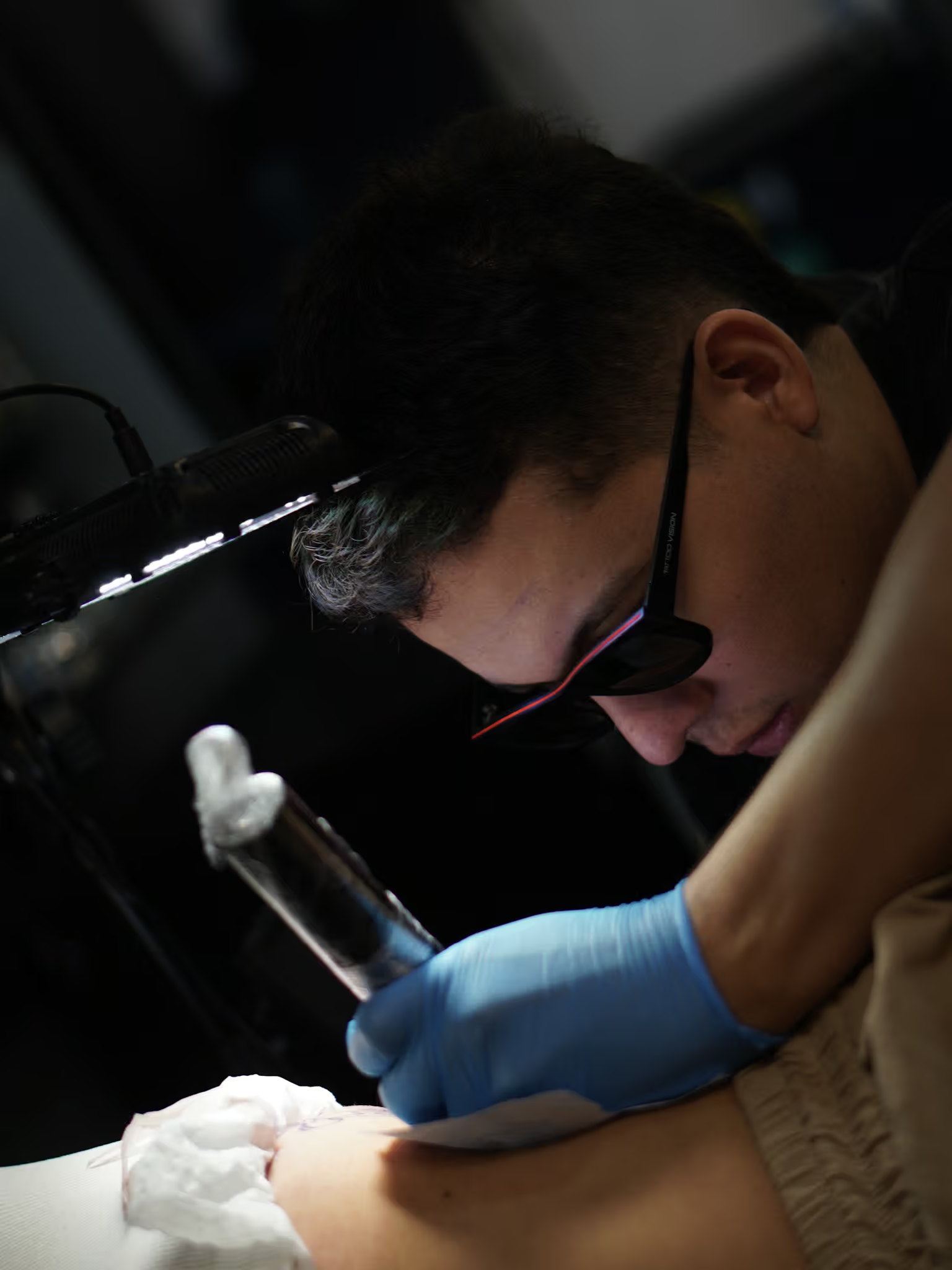
After your session, your artist will apply the first medical protective film over the tattoo.
- Keep the film on until the next day.
- Do not remove or lift the film.
- Avoid touching it with dirty hands.
- Avoid activities that could cause it to peel off or fill with sweat.
Remove the first film, wash the tattoo, and apply a new one.
- Wash your hands thoroughly.
- Remove the film slowly.
- Wash the tattoo with lukewarm water and mild fragrance-free soap.
- Do not rub.
- Pat dry with a clean paper towel.
- Let the skin dry completely.
- Apply the second protective film on clean, dry skin.
Keep the second film on for 4 to 5 days.
- It is completely normal to see ink and fluids accumulating under the film.
- Do not remove or lift the film unnecessarily.
- Avoid excessively long showers or very hot water.
- Check that the edges remain properly sealed.
If the film peels off significantly, allows water or dirt in, or causes a major skin reaction, remove it and continue with the next step.
Remove the second film permanently:
- Wash your hands.
- Remove the film slowly.
- Wash the tattoo with lukewarm water and mild fragrance-free soap.
- Pat dry gently.
- Apply a very thin layer of cream recommended by your artist.
The tattoo may begin to peel or itch. This is a normal part of the healing process.
- Gently wash the tattoo 1–2 times a day.
- Apply cream when the skin needs it. Don't over-saturate.
- Do not scratch or pick at peeling skin.
- Avoid direct sunlight.
- Avoid pools, hot tubs, and prolonged baths.
The peeling should gradually decrease.
The surface may appear healed, but the deeper layers continue recovering.
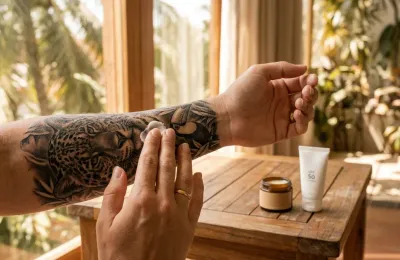
Keep moisturizing, and once fully healed, use broad-spectrum sunscreen.
How to care for a large tattoo with a protective pad
After your session, your artist will place an absorbent protective pad over the tattoo. This method is generally used for large pieces.
- The pad absorbs excess ink, blood, and plasma during the first hours.
- It protects the wound from bacteria and friction, and prevents staining clothes or sheets.
- Place a clean pad before going to bed.
Change the protective pad 3 to 4 times a day (approximately every 4 to 6 hours).
With each change:
- Wash your hands thoroughly.
- Remove the pad carefully.
- Wash the tattoo with lukewarm water and mild soap.
- Pat dry with a paper towel.
- Apply a very thin layer of healing cream.
- Place a new clean pad.
If the pad is heavily saturated with fluids, change it sooner than scheduled. Always place a clean one before sleeping.
From day 3, stop using the protective pad. The tattoo needs to be exposed to air to breathe and shed skin properly.
- Wash the tattoo with water and mild soap.
- Pat dry with a paper towel.
- Apply a thin layer of tattoo cream.
- Leave the tattoo completely uncovered.
Wash → Dry → Moisturize
- Wash the tattoo 2 to 3 times a day with water and mild soap.
- Always pat dry with a paper towel.
- Apply cream 3 to 4 times a day, or whenever the skin feels dry or tight.
- Do not cover the tattoo with the pad again.
- Do not scratch or remove peeling skin.
Peeling and itching are normal. Let the skin renew on its own.
The surface may appear healed, but the deeper layers continue recovering.
Keep moisturizing, and once fully healed, use broad-spectrum sunscreen.
How to care for a tattoo with open-air healing
The tattoo will be left uncovered when you leave the studio.
- Avoid touching it unnecessarily.
- Keep the area protected from dirt and friction.
- Wear clean, loose-fitting clothing.
- Do not apply products not recommended by your artist.
- Wash your hands before touching the tattoo.
- Gently wash with lukewarm water and mild fragrance-free soap.
- Carefully remove any excess plasma.
- Pat dry gently.
- Leave the tattoo clean and dry.
No cream is needed on this day, unless your artist instructs otherwise.
Repeat the same care: wash, remove fluids, pat dry carefully. Keep the area clean and dry.
Cream is still not necessary following this protocol.
From today, begin using specific healing cream.
- Wash and dry the tattoo.
- Apply a very thin layer of cream.
- Do not over-saturate the skin.
- Repeat whenever the skin needs it.
Wash → Dry → Moisturize
- Gently wash 1–2 times a day.
- Apply cream when the skin needs it.
- Do not scratch or remove peeling skin.
- Do not cover again with regular plastic wrap.
Itching and peeling may appear. This is a normal part of healing.
- Continue washing and applying cream when the skin is dry.
- Do not scratch or remove scabs.
- Avoid pools, hot tubs, and prolonged baths.
- Protect the tattoo from direct sun.
The tattoo may appear healed on the surface, but the skin continues recovering internally.
Keep moisturizing and use broad-spectrum sunscreen once fully healed.
General Tips for New Tattoo Care
Regardless of which healing method you follow, these aftercare tips always apply and are key to proper healing.
Protect your tattoo from the sun
Sun exposure is the biggest enemy of a new tattoo. Avoid direct sunlight for at least 4 weeks. Once healed, apply SPF 50+ sunscreen to preserve the colors.
Don't submerge your tattoo in water
Avoid pools, the ocean, hot tubs, and prolonged baths while the tattoo heals. Washing under the shower with mild soap is enough.
Don't pick at peeling skin
Peeling and itching are normal parts of tattoo healing. Let the skin renew on its own to avoid damaging lines and color.
Wear clean, loose clothing
Avoid rough fabrics that rub against the fresh tattoo. Friction can irritate the skin and affect healing.
Contact your artist if you notice: intense redness, pus, fever, or any reaction that seems abnormal.